How to select the type of servo electric cylinder? The engineering-level selection guide is here!
In non-standard automated equipment, servo electric cylinders are gradually replacing traditional cylinders and some hydraulic systems due to their high precision, high response, and strong controllability. They are widely used in fields such as automotive manufacturing, semiconductor equipment, aerospace testing, and multi-degree-of-freedom motion platforms.
However, in actual projects, improper selection of components often leads to insufficient thrust, failure to meet accuracy standards, and even equipment failure. Based on the research and application experience of Jiangzontai products, this article starts from 6 core parameters and systematically explains the selection logic of servo electric cylinders.
01 Load: The starting point for selection
Load is the primary factor in the selection process, directly determining the thrust level and structural specifications of the electric cylinder.
1. Specify the load type
Static loads: such as press-fitting, clamping
Dynamic loads: such as lifting, reciprocating motion
Impact load: such as stamping, rapid start and stop
2. Calculation method (simplified)
The actual thrust needs to be taken into account:
Load weight
Frictional resistance
Acceleration requirements
*The general recommendation is: The selected thrust should be ≥ the actual calculated thrust multiplied by a safety factor of 1.2 to 1.5.
3. Selection suggestions
Light load (≤10kN): Prefer compact or miniature electric cylinders
Rated load (10 - 100 kN): Standard servo electric cylinder
Overloading (≥100kN): Optional high-thrust structure or customized solution
02 Itinerary: Determine the structural dimensions
The travel refers to the maximum movement distance of the electric cylinder, which directly affects the overall size of the machine and the selection of the screw rod.
Key points
The longer the journey, the higher the requirements for the stability of the screw.
For long strokes, particular attention should be paid to the critical speed and deflection issues.
Jongsent's suggestion
Short stroke (≤ 200mm): Preferred for high-precision applications
Medium stroke (200 - 1000mm): General automation scenarios
Long stroke (≥ 1000mm): It is recommended to adopt a guiding structure or a customized solution.
At the same time, please be aware that
The total length of the electric cylinder ≈ Fixed length + Travel distance
This is particularly crucial in devices with limited space.
03 Speed: Directly related to efficiency
Speed determines the production cycle of the equipment and is a crucial factor affecting the efficiency of the production line.
Core parameters
Maximum speed (mm/s)
Acceleration (mm/s²)
Selection criteria
High-speed scenario: Use large lead screw + high-speed servo motor
High-thrust scenario: Usually, the speed will decrease (needs to be balanced)
Typical application
Handling equipment: 200 - 500 mm/s
Simulation platform: Emphasizes response speed and acceleration
Precision assembly: Low speed with high stability
Note that thrust and speed are usually inversely proportional. The selection should be balanced according to the actual working conditions.
04 Precision: It is jointly determined by the control and the structure.
The accuracy of servo electric cylinders is mainly reflected in the repeatability positioning accuracy and positioning accuracy.
Influencing factors
Thread type (ball screw / planetary roller screw)
Control mode (open loop / semi-closed loop / fully closed loop)
Sensor configuration (encoder / optical encoder)
Jongsent Product Advantages
Standard configuration: ±0.02 mm
Precise application (closed-loop control): Achievable to higher precision level (±0.005 mm)
Selection suggestions
General automation: ±0.02 mm is sufficient.
Precision processing/inspection: It is recommended to select a closed-loop feedback system.
Multi-degree-of-freedom platform: Attention should be paid to the collaborative accuracy of multiple axes.
05 Installation method: Affects system integration
The installation method directly affects the structural design and load-bearing conditions of the equipment.
Common installation methods
Front flange mounting: compact structure, suitable for linear thrust.
Installation at the rear ear axis: Suitable for swinging operation conditions
Base installation: Excellent stability, suitable for heavy-duty equipment
Selection criteria
Is there any imbalance or lateral force?
Is it necessary to use guide rails?
Is the installation space limited?
Suggestion
When there is lateral load, a guiding mechanism must be added to prevent the electric cylinder from experiencing abnormal force.
06 Usage frequency and operating conditions: Determine lifespan and stability
The frequency of use and operating conditions are the key factors that affect the lifespan and reliability of electric cylinders. These aspects should not be overlooked during the actual selection process.
1. Clearly define the types of usage frequency
Low-frequency operation: such as regulating mechanisms, intermittent action equipment
Medium-frequency operation: similar to a conventional automated production line
High-frequency operation: such as continuous reciprocating or rhythmic-type equipment
*Different frequencies have significantly different requirements for the service life, lubrication, and heat dissipation capabilities of the screw rod.
2. Analysis of operating conditions factors
In practical applications, the following aspects should be given particular attention:
Temperature conditions: High-temperature or low-temperature environment
Protection requirements: Dust, moisture, corrosion prevention
Load status: Is there any shock or uneven loading?
Work environment: Cleanroom, outdoor or heavy industry environment
*The more complex the working conditions are, the higher the requirements for the structure and protection of the electric cylinder become.
3. Influence mechanism (simplified understanding)
The main factors influencing usage frequency and working conditions:
The wear rate of the screw and transmission components
Lubrication status and maintenance cycle
Overall operational stability and failure rate
In general:
The higher the operating frequency and the harsher the environment, the higher the reliability requirements for the electric cylinder.
4. Selection suggestions
High-frequency application: Prioritize structures with long service life, and pay attention to heat dissipation and lubrication design.
Complex environment: It is recommended to choose a device with a high level of protection (such as IP65 or above)
Presence of dust/water vapor: Sealing and protection plans need to be given special consideration.
Long-term continuous operation: It is recommended to reserve performance margin to avoid long-term full-load operation.
07 From selection to implementation: Product performance is equally crucial
After clearly defining key parameters such as load, stroke, speed, accuracy, installation method, working conditions and usage frequency, the actual performance of the electric cylinder often depends on the design and manufacturing quality of the product itself.
In practical applications, common problems include insufficient thrust, degradation of accuracy, failure to meet protection standards, and unstable lifespan. All these factors will directly affect the long-term performance of the equipment. Therefore, during the selection process, in addition to parameter matching, more attention should be paid to the comprehensive performance and reliability of the product.
Based on these key requirements, Jiangzontai has carried out systematic optimization in the design and manufacturing of servo electric cylinders, with the main focuses being in the following aspects:
1. Performance capabilities covering multiple operating conditions
In terms of core indicators such as thrust, accuracy and protection, the electric cylinder needs to maintain stable performance under various working conditions.
In both standard and customized solutions, Jiangshentong electric cylinders can provide thrust coverage ranging from light load to heavy load. Under closed-loop control conditions, the repeat positioning accuracy can reach a higher precision level (±0.005 mm), meeting the requirements for precise assembly and inspection. At the same time, for dusty, humid or complex environments, customized solutions with high protection levels (up to IP68) can be provided to adapt to harsh working conditions.
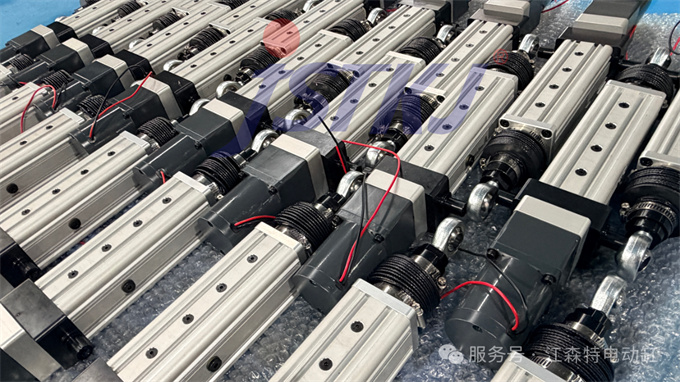
(Jonset Dust Cover Electric Cylinder)
2.Flexible adaptation for non-standard automation
In non-standard automation scenarios, a single standard product is often insufficient to meet the requirements.
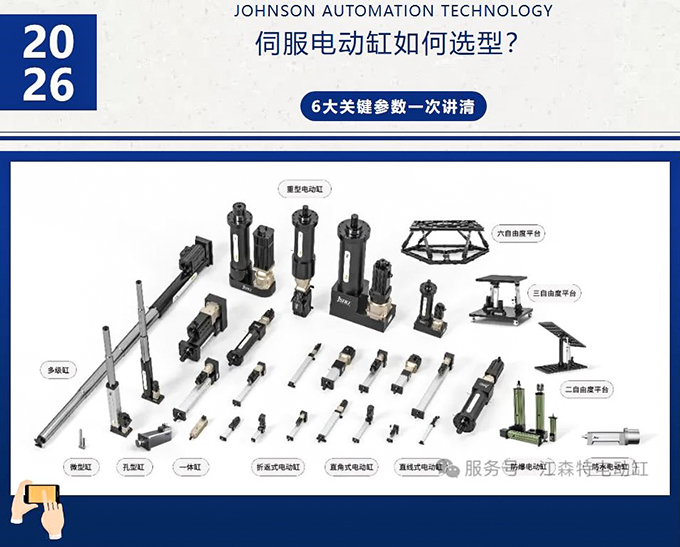
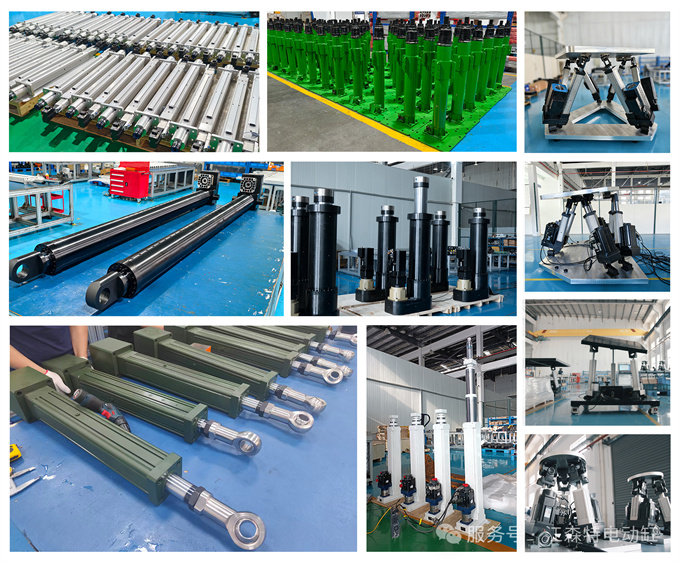
The Jiangshentong electric cylinder supports various structural forms and installation methods for combination. It can be customized according to the equipment space, motion form and control requirements, and is suitable for complex application scenarios such as multi-stage cylinders, integrated cylinders and multi-degree-of-freedom platforms, achieving higher system integration.
(Jonset electric cylinders that are adaptable to complex application scenarios)
3. Taking into account both efficiency and usage cost
Compared with traditional pneumatic or hydraulic solutions, electric cylinders have significant advantages in terms of energy efficiency and maintenance.
By adopting an efficient transmission structure design and reasonable component selection, energy consumption can be effectively reduced; moreover, the structure of the electric cylinder is relatively simple and the maintenance frequency is low, which helps to lower the operation and maintenance costs of the equipment during long-term use.
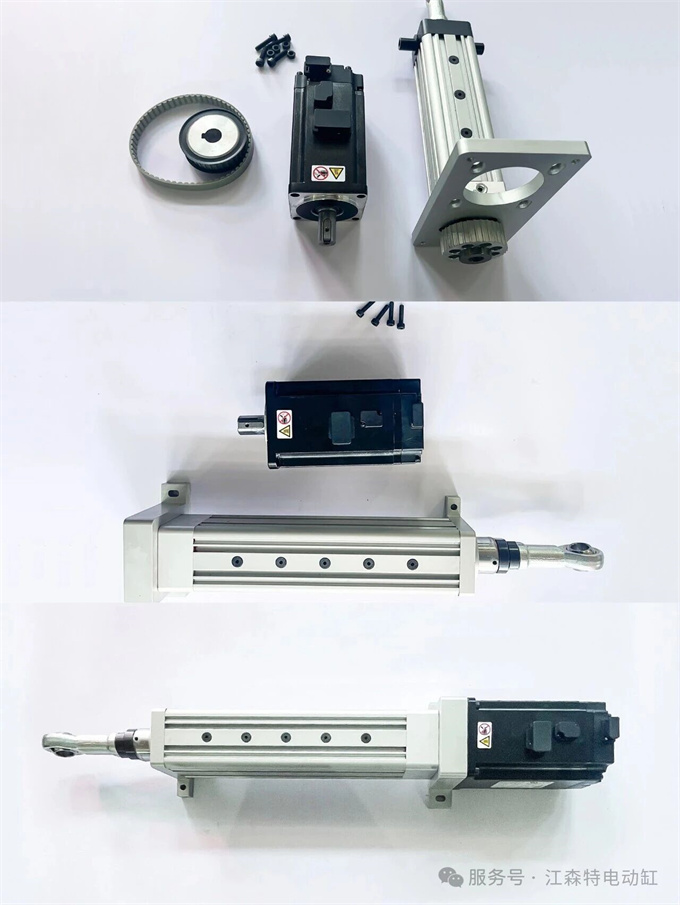
(Jonset electric cylinders have a simple structure and are easy to install.)
4. Reliability design for complex environments
In actual industrial settings, factors such as temperature, dust and humidity have a significant impact on the stability of equipment.
According to different working conditions, the electric cylinder can be designed with targeted protection measures. Moreover, through methods such as overload protection and status monitoring, the safety and continuity of the system operation can be enhanced.
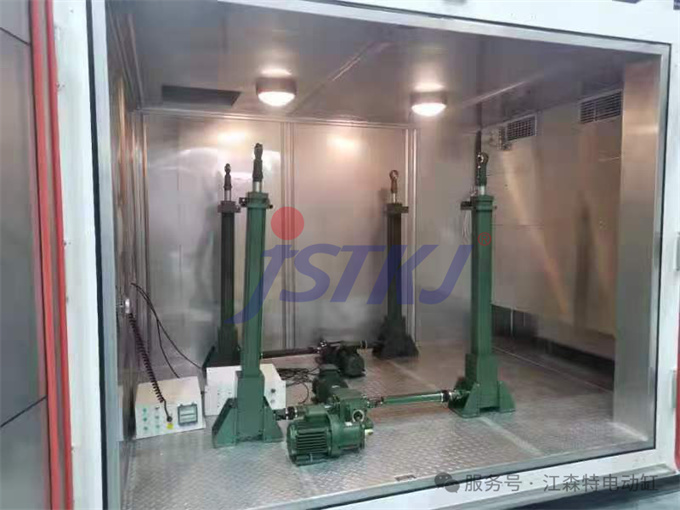
(Jonset electric cylinder temperature test)
Overall, the selection of electric cylinders is not merely a matter of parameter matching; it also involves a comprehensive consideration of the system's performance and long-term stability.
Under the trend of continuous development of industrial automation towards higher precision and efficiency, electric cylinders are gradually becoming an important solution to replace traditional pneumatic and hydraulic actuators. By selecting appropriate models and combining with reliable products, it is possible to ensure performance while achieving better total life cycle costs.
Jungent Automation Technology has extensive engineering experience in servo electric cylinders, multi-stage cylinders and six-degree-of-freedom motion platforms. It can provide customized selection and integration solutions based on the specific working conditions of customers.
If you are conducting project selection, it is recommended that you first clearly define the application scenarios and core requirements, and then match the parameters to ensure that the equipment performance and cost are balanced.